10 Tips Beginners Must Know Before Starting Aerial Training
Motion Virtues | JUN 21, 2024
beginner
aerial
silks
fabrics
lyra
yoga
coach
fitness
training
strength
flexibility
balance
When I first walked into an aerial studio, I was filled with a mix of excitement and nerves. The idea of flying on silks, was something I'd only ever seen in performances.
Could I really do that? As someone who was relatively new to the world of aerial arts, I had my doubts.
I remember the first time I tried to climb the silks. My grip was shaky, my arms felt weak, and I struggled to even get off the ground. But something inside me knew that this was more than just a physical challenge—it was a journey of self-discovery. I kept showing up, determined to stick with it.
Along the way, I learned valuable lessons that I wish someone had shared with me from the start. Things like the importance of warming up properly, the value of patience, and the need to listen to your body. These were the tips that transformed my experience from frustrating to empowering.
Now, as an aerial instructor, I see so many beginners feeling the same way I did—curious but unsure. That’s why I’m sharing my top 10 tips for anyone starting their aerial training journey. These are the things that helped me build confidence, strength, and grace in the air. I hope they inspire you to take that first step and keep reaching for new heights.
Embarking on an aerial journey is an exhilarating experience that combines athleticism with artistic expression. Whether you're drawn to silks, lyra, or trapeze, these tips will prepare you for a successful start:
Research and Choose a Reputable Studio: Look for a studio that prioritizes safety, has qualified instructors, and offers beginner-friendly classes. Research reviews and visit the studio. When reading reviews, note which instructors are mentioned and whether the studio creates a a sense of community.
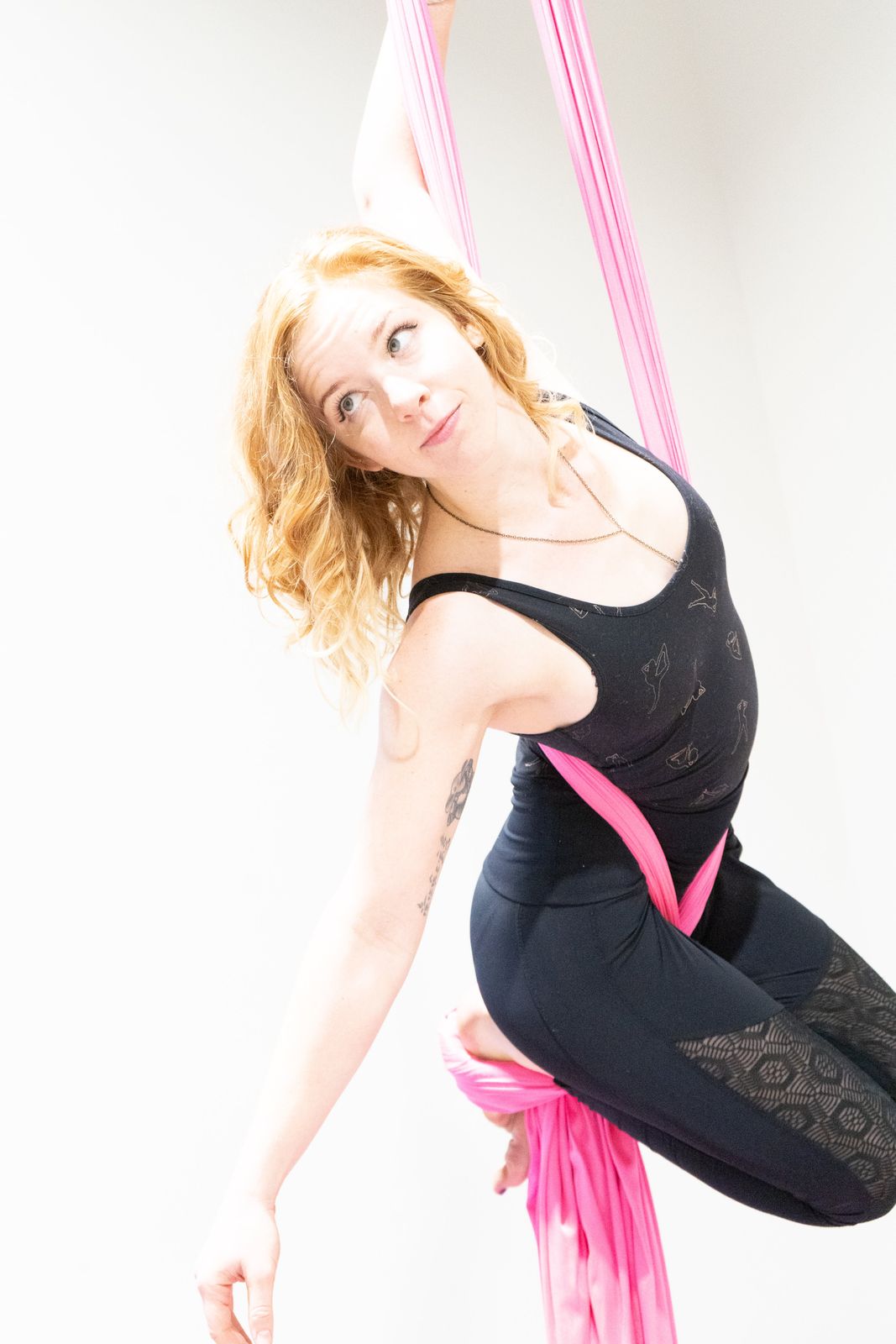
Invest in Proper Attire: Wear form-fitting clothing that covers your skin to prevent burns and abrasions from aerial equipment. Avoid loose clothing, jewelry or watches that could get caught during movements. High waisted leggings that cover the ankle completely are a safe bet. If you find leggings that have a bit of mesh in their design, that will help create some friction on the silks to prevent sliding when climbing up. Leotards can be a nice addition when you begin to work on drops and sliding down fabric, protecting your midriff from Silk burns.
Start with Introductory Classes: Begin with introductory or beginner-level classes designed to teach fundamental techniques, safety protocols, and proper use of equipment. These classes provide a solid foundation for progressing in aerial arts and ensure that you have safety dialed in before trying tricks in the air.
Focus on Strength, Flexibility and Balance Training: Aerial arts require all of these and sometimes all at once. Establish a floor exercises routine that prioritize conditioning exercises that target core strength, upper body strength, and overall flexibility to prepare for your first class. Having a preexisting fitness regime will go a long way in your Aerial practice and can help you overcome many beginner challenges, such as inverting.
Learn to Listen to Your Body: Aerial arts can be physically demanding. Listen to your body first and foremost, taking breaks as needed to avoid pushing beyond your limits. Learning new tricks can be exciting, but sometimes we become distracted from what our body needs. If you're noticing your body is shaking or you're experiencing mental fog - it might be time to take a break.
Master Basic Safety Techniques: Safety should always take priority in aerial arts. Ensure the crash pad remains directly below the apparatus point for a soft landing. You will learn safety techniques from an instructor as new situations call for it.
Consistency is Key: Like any skill, consistency in practice is essential for improvement. Attend classes regularly to build muscle memory, refine techniques, and progress in your aerial journey.
Embrace the Learning Curve: Aerial arts require patience and perseverance. Embrace the learning curve and celebrate small achievements along the way. Progress takes time and dedication. It's best not to compare yourself to any one else in class. Everyones abilities will be different !
Seek Feedback and Guidance: Don't hesitate to ask questions and seek feedback from your instructor. They can provide valuable insights and corrections to help you improve your technique with confidence.
Enjoy the Journey: Above all, enjoy the journey of exploring aerial . Embrace the challenge, creativity, and personal growth that come with learning new aerial skills. Celebrate your progress and enjoy the unique experience without putting pressure on yourself to succeed. They main goal for Aerial is to have a great time!
BONUS TIP: Keep an Aerial journal: Write down names of skills you're learning in class as well as floor or aerial conditioning exercises that will help you reach new gains. You can refer back to these before the start of your next class. which will prepare you and likely level you up faster.
Conclusion
Follow these tips and approaching aerial arts with enthusiasm and dedication to build a solid foundation for growth and achievement in this dynamic and rewarding art. Don't take yourself too seriously and look to Aerial as a creative muse for unlocking new qualities in yourself.