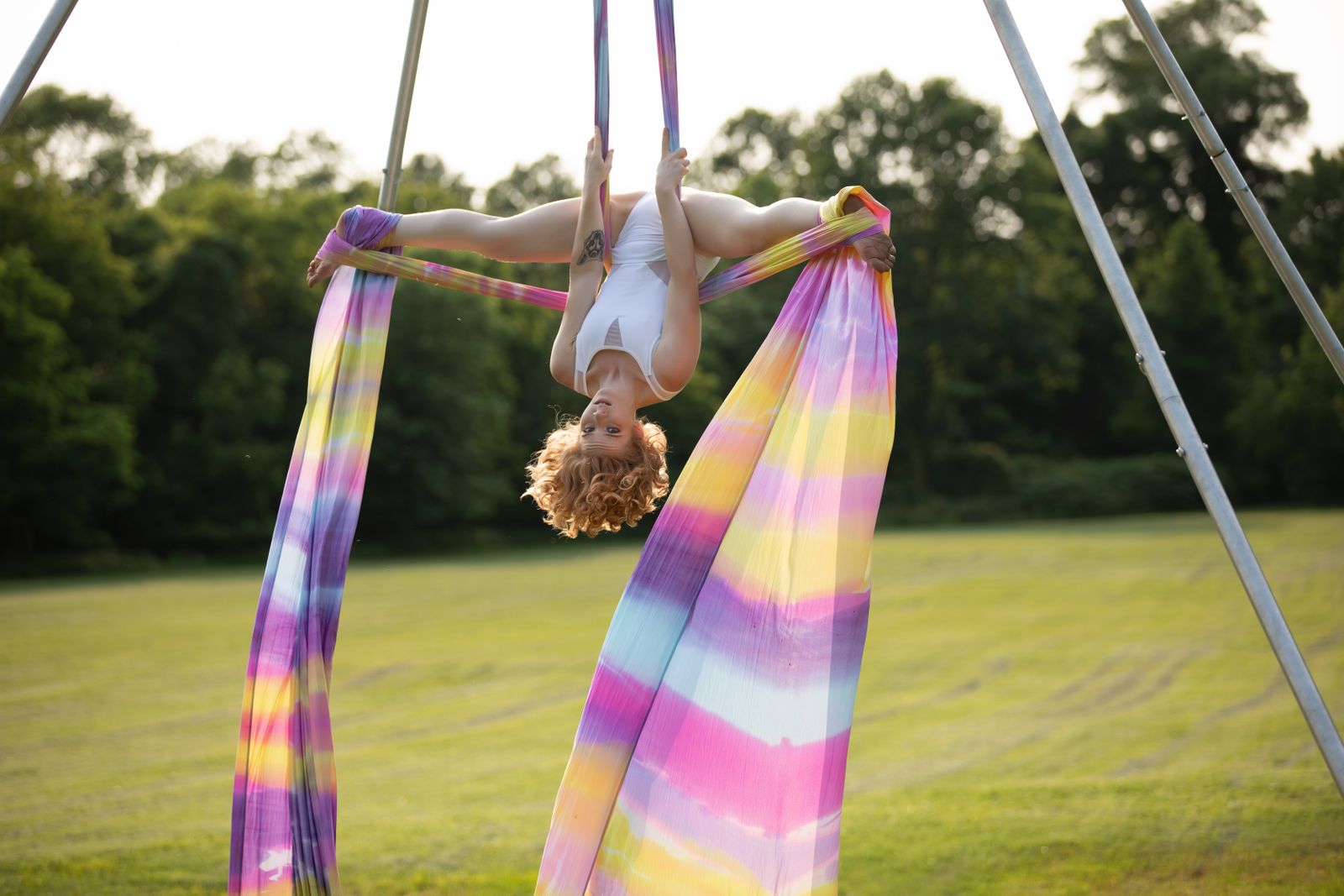
Perfect your Straddle Invert (Like a Boss!) : 9 Tips for Success
Motion Virtues | JUL 9, 2024
aerial
arts
movement
inversion
silks
lyra
sling
coaching
fitness
health
Hi there! 🌟 Ready to conquer that elusive invert straddle?
Don’t worry, we’ve all been there, hanging upside down like a confused bat.
Flipping upside down without the support of a knot can be daunting- but once you have mind to body awareness of the muscles to engage, you'll be well on your way.
Follow these 9 essential tips to get you Flipping from a place of ease
1. Build Core Strength
A strong core supports these muscles by distributing the body's weight effectively and reducing strain on the upper extremities. This support allows aerialists to execute movements with greater control and efficiency.
Muscles Involved: Rectus abdominis, obliques, transverse abdominis, lower back muscles.
Exercises:
Planks: Hold a plank position, ensuring your body forms a straight line from head to heels. Engage your core and hold for 30-60 seconds.
Hollow Holds: Lie on your back, lift your head, shoulders, and legs off the ground, and hold the position. Engage your core and keep your lower back pressed into the floor. Hold for 20-30 seconds.
Leg Lifts: Start seated with legs extended and widened into a straddle. Lift straight legs up from floor tracing them around the height of ayoga block. Perform 3 sets of 10 reps.
2. Enhance Grip Strength
Building grip strength improves endurance in the hands, wrists, and forearms, enabling aerialists to maintain their hold over extended periods.
Muscles Involved: Forearm flexors, hand muscles.
Exercises:
Dead Hangs: Hang from a pull-up bar or your aerial apparatus, keeping your shoulders engaged. Hold for as long as possible, aiming for 30-60 seconds.
Farmer’s Walk: Hold a heavy weight in each hand and walk for a set distance or time. This builds overall grip strength.
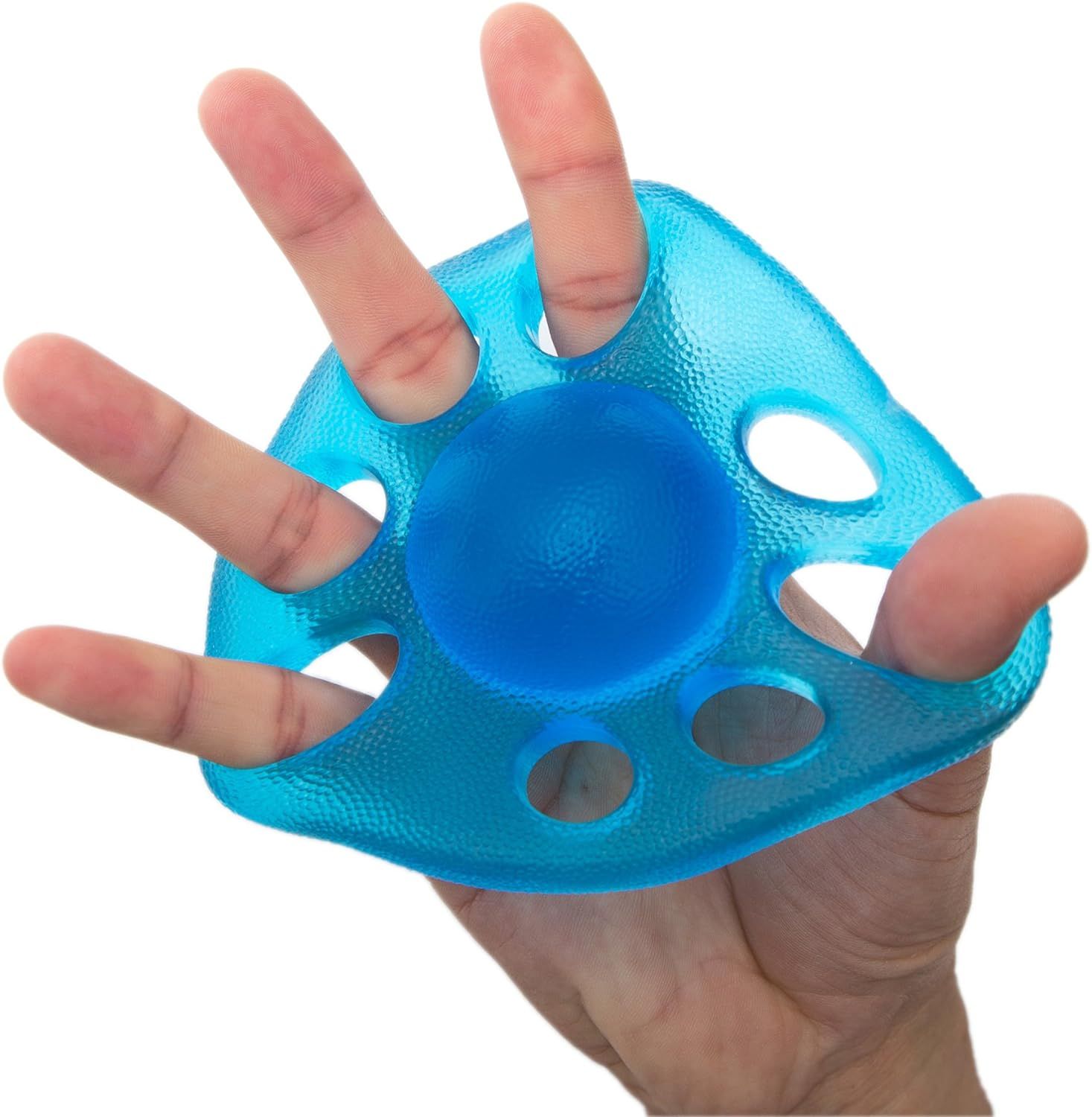
Hand Grips: Use hand grip strengtheners to squeeze and release. Perform 3 sets of 15-20 reps for each hand.
Check out this Finger Exerciser Hand Strength Tool, which can work individual finger extension as well as grip strength for under $10. You also have the option to buy a three pack with light, medium and heavy tension.
3. Practice Leg Raises
Leg raises mimic the movement patterns used in aerial inversions, helping to reinforce proper technique and muscle activation.
Muscles Involved: Hip flexors, lower abs, quadriceps.
Exercises:
Hanging Leg Raises: Hang from a bar and lift your legs to a 90-degree angle or higher. Focus on controlled movement. Perform 3 sets of 10-12 reps.
Captain’s Chair Leg Raises: Use a captain’s chair apparatus to support your back while lifting your legs. Perform 3 sets of 10-12 reps.
Lying Leg Raises: Lie on your back and lift your legs while keeping them straight. Lower them without touching the ground. Perform 3 sets of 15 reps. When these start to feel easy, you can add ankle weights to increase challenge.
4. Engage Your Back Muscles
Developing strength and endurance in the back muscles is essential for aerialists to sustain inverted positions over extended periods. Strong back muscles support the body's weight and facilitate smooth transitions between poses
Rows: Use a the silks, a barbell, dumbbells, or resistance band to perform rows. Keep your back straight and pull the weight towards your chest. Perform 3 sets of 10-15 reps.
Pull-Ups: Perform pull-ups or assisted pull-ups to strengthen your upper back. Aim for 3 sets of 5-10 reps.
Lat Pull-Downs: Use a lat pull-down machine to pull the bar down to your chest, engaging your lats. Perform 3 sets of 10-12 reps at a challenging but approachable weight. You can also use a resistance band by tying a knot it the center of the band, leaving two equal tails. Wedge the knot at the top frame of a closed door.
5. Improve Hip Flexibility
Flexible hips facilitate proper alignment of the pelvis and spine during inversions. This alignment helps distribute the weight more evenly, reducing strain on the lower back and promoting stability while upside down.
Muscles Involved: Hip flexors, hamstrings, glutes.
Exercises:
Pigeon Pose: From a plank position, bring one knee forward and place it behind your wrist while extending the other leg back. Hold for 30-60 seconds on each side.
Forward Fold: Stand with feet hip-width apart and fold forward at the hips, reaching for your toes. Hold for 30-60 seconds.
Lunges: Perform lunges with a deep stretch at the bottom position. Hold for a few seconds before standing back up. Perform 3 sets of 10-12 reps per leg.
6. Stacking Joints
This vertically aligns your body's major joints—such as spine, hips and shoulders—along the gravitational line. This alignment minimizes the effort required to maintain balance and stability because your body is positioned in its most structurally efficient form.
Muscles Involved: Shoulders, elbows, wrists, hips, knees, and ankles.
Exercises:
Wall Handstands: Practice handstands against a wall to ensure proper alignment. Focus on stacking your joints (shoulders over wrists, hips over shoulders) for stability. Perform 3 sets of 30-60 seconds.
Forearm Planks: Hold a plank position on your forearms, ensuring your elbows are directly under your shoulders. Engage your core and maintain a straight line. Perform 3 sets of 30-60 seconds.
Pilates Leg Circles: Lie on your back with one leg extended towards the ceiling. Make small circles with your leg, focusing on keeping your hips stable and joints aligned. Perform 10 circles in each direction for each leg.
7. Focus on Technique
Execute inversions with deliberate, controlled movements. Avoid rushing into positions or relying solely on momentum. Emphasize smooth transitions and maintain awareness of your body's position in space
Muscles Involved: Entire body, with emphasis on core, back, and legs.
Exercises:
Controlled Straddle Lifts: Hang from your apparatus and lift your legs into a straddle position with slow, controlled movements. Focus on engaging your core and maintaining proper form. Perform 3 sets of 5-10 reps.
Bodyweight Drills: Practice straddle inverts on the ground to develop muscle memory. Perform 3 sets of 10 reps.
Mirror Work: Use a mirror to practice your form, ensuring your movements are aligned and controlled.
8. Use a Spotter or Trainer
Assisted Inverts: Have a spotter help guide your legs into a straddle position while you focus on engaging the right muscles.
Partner Drills: Work with a partner to practice lifting and holding positions. This can help you build confidence and strength.
Feedback Sessions: Have your trainer provide real-time feedback on your form and technique to ensure you’re performing movements correctly.
9. Consistency and Patience
Regular Practice: Incorporate the above exercises into a regular training routine, aiming for at least 3-4 sessions per week.
Progress Tracking: Keep a journal of your progress, noting improvements in strength, flexibility, and technique.
Rest and Recovery: Allow your body to recover between intense training sessions. Use foam rollers, massage, and stretching to aid recovery.
You’ve got this, Remember, every little step (or flip) forward is a victory. Keep practicing, stay patient, and most importantly, have fun with it. If you ever need a cheerleader or some extra tips, you know where to find me. Happy flying, and see you in the air !
Xoxo,
Motion Virtues
(In the spirit of full transparency, please be aware that some of the links on this blog are affiliate links. This means that if you click on one of these links and make a purchase, I may earn a small commission at no additional cost to you. I only recommend products and services that I genuinely believe in and think will add value to your experience. Your support helps keep this blog running and allows me to continue creating content that you love. Thank you for your support!)